
For thousands of years, the Rudraksha bead has been one of the most sacred objects in Hindu and yogic traditions. Revered as the tears of Lord Shiva, these seeds from the Elaeocarpus ganitrus tree are believed to carry immense spiritual power — power that, according to tradition, must be awakened before the bead can truly serve its wearer. This awakening process is known as Prana Pratishtha, a Sanskrit term that translates to "the establishment of life force." Just as a temple idol must be consecrated before it becomes a divine dwelling, a Rudraksha must be activated before it becomes a living spiritual instrument.
Whether you are approaching Rudraksha from a place of deep devotion, yogic practice, or curious spiritual exploration, understanding how to properly activate your bead is essential. This guide will walk you through the entire process — the preparation, the rituals, the mantras, and the care that follows.
What Is Prana Pratishtha and Why Does It Matter?
In Indian spiritual philosophy, prana refers to the vital life force that animates all living things. Pratishtha means to establish or install. Prana Pratishtha, then, is the sacred act of invoking divine energy into an object — breathing life into something that was previously inert. This ritual is performed for temple deities, sacred yantras, and spiritual tools like Rudraksha.
A Rudraksha bead, even in its natural form, contains inherent energetic properties. Ancient texts like the Shiva Purana and Padma Purana describe the bead as naturally imbued with Shiva's consciousness. However, the activation ritual is believed to amplify, focus, and personalize that energy — aligning it specifically with the wearer's own energy field, intention, and spiritual purpose.
Think of it this way: a candle holds the potential for light, but it still needs a flame to fulfill that potential. Prana Pratishtha is that flame.
Before You Begin: Choosing the Right Rudraksha
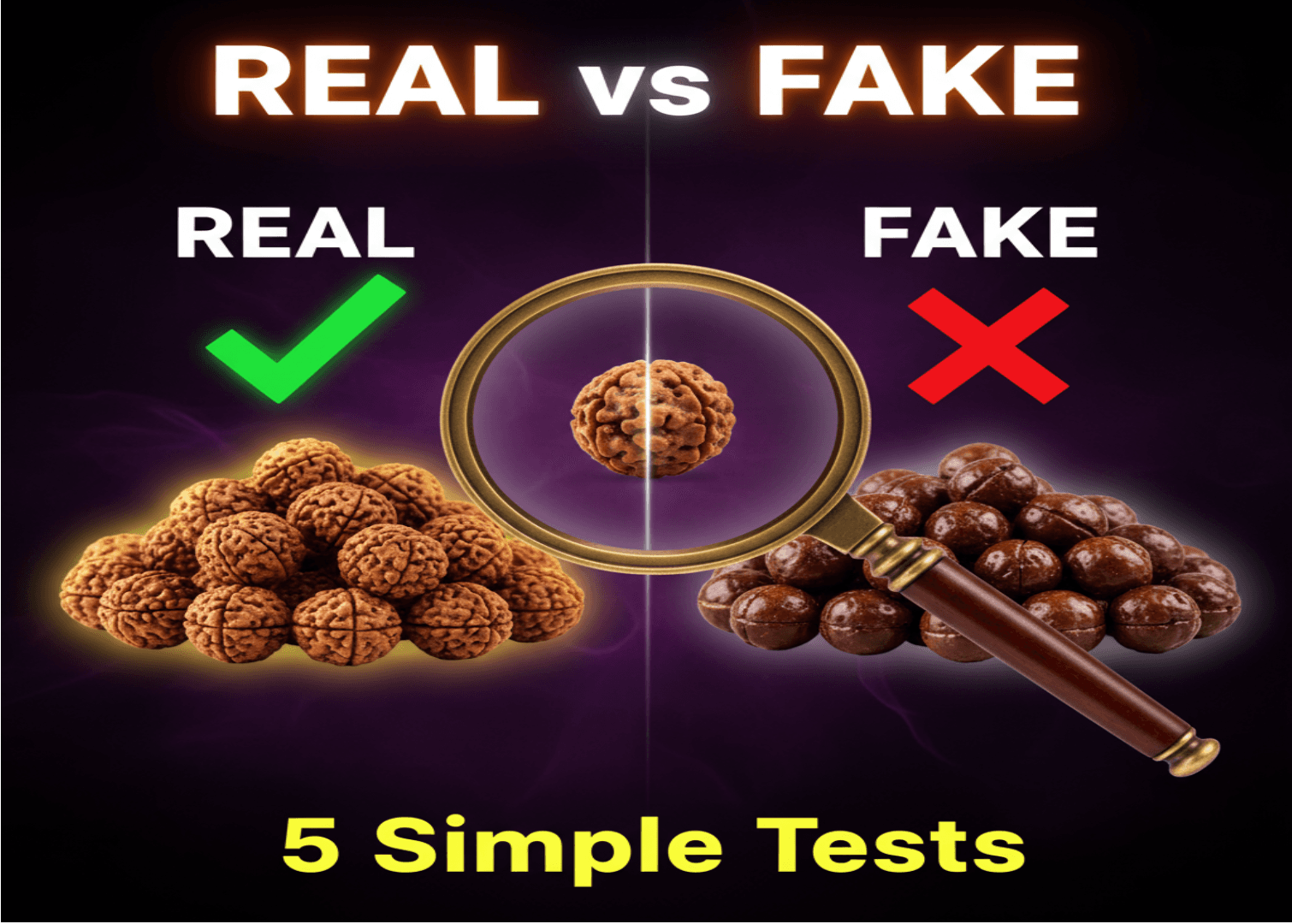
Activation begins long before the ritual itself. The first step is ensuring that you have an authentic Rudraksha bead. The market is unfortunately flooded with fake or treated beads, so sourcing from a trusted, reputable supplier is crucial.
An authentic Rudraksha has clearly defined mukhis — the natural lines or faces that run from the top to the bottom of the bead. The number of mukhis determines the bead's specific properties. A 1 Mukhi Rudraksha is associated with supreme consciousness and liberation, while a 5 Mukhi is the most common and is linked to health, peace, and overall well-being. Before activation, confirm the mukhi count of your bead and research its associated deity and mantra, as these will guide the ritual.
Once you have your bead, treat it with reverence from the very beginning. Avoid placing it on the floor, near shoes, or in spaces considered impure. Wrap it in a clean red or yellow cloth until the day of activation.
Step 1 — Choose an Auspicious Day and Time
Timing carries deep significance in Vedic tradition. The most auspicious days for Rudraksha activation are Monday (the day of Lord Shiva), Mahashivaratri, Shravan Mondays, and any day falling under the Pradosh Kaal — the twilight period that is especially sacred to Shiva.
If none of these dates are immediately available, any Monday during the waxing phase of the moon (Shukla Paksha) is considered favorable. Sunrise is generally the preferred time for performing the ritual, as the energy of the day is fresh, the mind is clear, and the atmosphere is considered most sattvic (pure).
Step 2 — Purify Yourself
Before handling the Rudraksha for the activation ritual, you must purify your body, mind, and space. Begin with a complete bath, ideally using clean water with a few drops of Ganga jal (Ganges water) if available. Wear clean, freshly washed clothes — preferably white or saffron, colors associated with purity and spiritual practice.
Abstain from meat, alcohol, and non-vegetarian food for at least 24 hours before the ritual. If possible, observe a fast or eat only light, sattvic food on the day of activation. This is not merely symbolic — it is believed that the body's vibrational state directly impacts the quality of energy that is transmitted to the bead during consecration.
Step 3 — Prepare the Sacred Space
Set up a clean altar or prayer space facing east or north. Place a red or yellow cloth on the altar as a base. On it, arrange the following items: the Rudraksha bead (still wrapped in cloth), an image or idol of Lord Shiva, a small vessel of Panchamrit (a mixture of milk, curd, honey, ghee, and sugar), a vessel of clean water or Ganga jal, raw milk, sandalwood paste (chandan), fresh flowers — preferably white or blue, Bilva (bel) leaves, incense sticks, a diya (lamp) with ghee or sesame oil, and Akshat (unbroken rice grains mixed with turmeric).
Light the diya and the incense. Ring a small bell if you have one — the sound is believed to purify the atmosphere and signal the beginning of sacred time.
Step 4 — Cleanse the Rudraksha
Unwrap the bead gently and hold it in your palm. Begin by cleansing it physically and energetically. Dip it first in Panchamrit, reciting "Om Namah Shivaya" continuously. Then wash it with clean water. After this, dip it in raw milk and allow it to soak for a few minutes — milk is a purifying agent in Vedic ritual and is believed to neutralize any negative energies the bead may have absorbed before reaching you.
Finally, apply a small amount of sandalwood paste to the bead with your right thumb, drawing your intention into it with each stroke. This anointing is both a physical act of cleansing and a symbolic act of preparation — you are marking the bead as sacred.
Step 5 — The Invocation (Avahan)
Now you invite divine energy into your sacred space and into the bead. This is the heart of Prana Pratishtha. Sit in a comfortable position, close your eyes, and take several slow, deep breaths. Still your mind as much as possible.
Begin by chanting the Dhyana Mantra of Lord Shiva — a verse that brings Shiva's form to mind and heart. Even if you do not know it by memory, reading it with sincerity carries power. You may also simply sit in silence and hold the image of Shiva in your mind — the eternal, ash-smeared, crescent-mooned, compassionate one.
Then hold the Rudraksha in both palms, close to your heart, and chant the beej mantra associated with your specific bead. For the most common 5 Mukhi Rudraksha, this mantra is "Om Hreem Namah". Chant the mantra 108 times, using a mala (prayer beads) to count if possible. As you chant, visualize golden or blue-white light entering the bead from above, filling it completely, making it glow. Feel gratitude, reverence, and sincerity — these emotions are energetically potent and are considered as important as the mantra itself.
Step 6 — Offer Bilva Leaves and Flowers
After the mantra chanting, offer Bilva leaves and fresh flowers to the Shiva idol or image, as well as symbolically to the Rudraksha. The Bilva leaf, with its tri-lobed form, represents the three aspects of Shiva — creator, preserver, and destroyer — and is said to be extraordinarily dear to him.
Touch the offerings to the bead and then place them at the base of the idol. This act of offering (naivedya) is a gesture of gratitude and surrender — you are acknowledging that the energy being placed in the bead is not yours to command, but divine grace that you are humbly receiving.
Step 7 — Final Sealing of the Energy
The activation is completed with a final sealing of the energy. Hold the bead in your right hand and blow three slow, intentional breaths onto it. In yogic and tantric tradition, the breath carries prana, and this act literally breathes life into the bead — a direct, personal Prana Pratishtha.
Then press the bead gently between your palms at your heart center (Anahata chakra) and silently state your intention — why you are wearing this Rudraksha, what you seek from this spiritual partnership, what you are willing to offer in return. This intention seals the activation.
Conclude with a final recitation of "Om Namah Shivaya" — seven, eleven, or 108 times — and a moment of silent gratitude.
Step 8 — String and Wear the Rudraksha
Your Rudraksha is now activated and ready to wear. String it with a natural material — red silk thread, gold wire, or silver wire are all traditionally appropriate. Wear the Rudraksha against your skin so that it remains in direct contact with your body's energy field. The most powerful points for wearing are around the neck (close to the heart), on the wrist, or around the upper arm. Avoid wearing it below the waist.
Caring for Your Activated Rudraksha
Activation is not a one-time event — it is the beginning of an ongoing relationship. To maintain the bead's vibrational quality, care for it consistently. Remove it when bathing with chemical soaps, swimming in chlorinated water, or engaging in activities that might expose it to chemical pollutants. Keep it clean by occasionally rinsing it in clean water and anointing it lightly with sesame or sandalwood oil to prevent the natural wood from drying and cracking.
Re-energize the bead periodically by placing it before a Shiva image on Monday mornings, chanting your beej mantra over it, or by exposing it to early morning sunlight. Over time, the bead is said to attune itself more and more deeply to your own energy field, becoming an increasingly powerful spiritual companion.
Avoid lending your activated Rudraksha to others. Once consecrated to you, it carries your specific vibrational imprint, and sharing it is believed to disrupt both your own energetic connection and potentially interfere with the other person's energy as well.
A Note on Intention and Faith
Ultimately, the most powerful ingredient in any Prana Pratishtha ritual is not the mantra, the offerings, or the timing — it is the sincerity and openness of the person performing it. Tradition teaches that divine energy responds to genuine longing, to a heart that is open and humble. You do not need to be a scholar of Sanskrit or an expert in Vedic ritual to activate a Rudraksha effectively. What you need is presence, respect, and a genuine desire to connect with something greater than yourself.
The Rudraksha, once activated, becomes more than a seed or a piece of jewelry. It becomes a focal point for your spiritual life — a tangible reminder of your practice, your intention, and the grace that is always available to those who sincerely seek it.
Wear it with devotion. Speak to it in your prayers. And let it serve as a constant, living link between you and the consciousness that the ancient rishis recognized in every murmur of the universe.
Om Namah Shivaya.